Wildlife Removal Before & After Photos
Click on a photo to enlarge.
Squirrels Chew Apart Hole in the Roof & We Fix It in Kendall Park, NJ


This homeowner in Kendall Park, NJ had squirrels living in his attic and even damaged a portion of his roof by chewing a hole in it! Previously, we safely retrieved all the squirrels from the home and relocated them to a new, humane environment. After disinfecting the area, we began to repair the damage.
First, we cut a piece of sturdy metal flashing and installed it over the opening. Next, we applied roof grit to the flashing to blend it in with the color of the roof. Afterward, we applied a premium adhesive to the area and spread it across the flashing in order to hold the roof grits in place. Now the roof is repaired and good as new!
Squirrels Use Old Bathroom Vent to Infest Home in Kendall Park, NJ


This homeowner in Kendall Park, NJ kept hearing noises in his upstairs bathroom and was concerned that something was living inside his home, so he called Little Rascals for help. Once we arrived and began inspecting the property, we spotted some squirrels going in and out of a vent on the side of the home. Looks like the homeowner has a squirrel problem. We informed the owner who mentioned that the vent is old and use to connect to the bathroom.
We temporarily enclosed the area with hardware cloth, installed a one-way device in front of the exhaust vent, and set up several baited traps nearby. The one-way will allow the squirrel to safely leave the attic, but prevent them from getting back in. A short while later, we successfully retrieved the squirrels and relocated them to a new, humane location. Additionally, we disinfected the area and installed a DryerWallVent®. The DryerWallVent® is made out of heavy-duty galvanized steel and its large opening and angled damper provide maximum airflow efficiency for safe venting. Integrated magnets keep the damper closed when not in use, preventing squirrels, birds, and all nuisance wildlife from infesting the home.
Challenging raccoon trapping job in Kendall Park, NJ


Raccoons, although they walk on all fours like most mammals, have human-shaped paws with thumbs, not to mention razor-sharp claws. Because of their anatomy, these animals are amazingly good climbers. They are able to climb and walk on a much steeper roofs than we can. Unless you are a skilled rock climber, most of us regular folks have limited grip strength relative to our body weight, and none of us have a nice set of claws to dig into materials.
This wildlife job for a homeowner in Kendall Park, NJ was particularly tricky, and it took some extra planning because of this home’s steep pitched roof. To make matters even more challenging, there wasn’t much space between the house, and the ladder angle was a bit steeper than I would have liked. To solidly secure the ladder, I was able to ”foot” it right up against the bottom of the fence, so it would not "kick out" while I was on it.
Buttressed by the fence, this ladder would not budge on inch, and I had plenty of of security to work with my hands off the ladder without worrying about whether it would move while I was on it. I installed a “positive” set up. With this type of set up, any animal has no choice but to go through the trap, no matter if it's coming or going from the home.
The raccoon was soon trapped, and I safely relocated him far away from any human habitats. After trapping the trespasser, I closed off the access into the home in order to prevent any further wildlife intrusions. All in all, this was a satisfying job with a great resolution and a very happy homeowner who could now enjoy his home without sharing it with a destructive raccoon!
Putting an End to the Bats Getting Inside the Home in Monmouth Junction, NJ
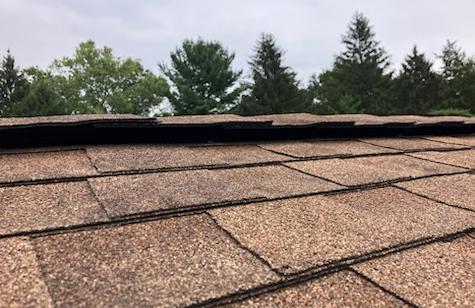
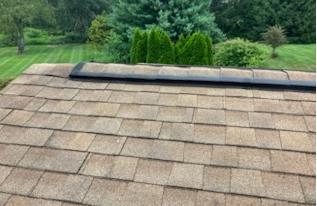
This homeowner in Monmouth Junction, NJ had been dealing with bats inside her attic for quite some time. Finally, she decided that enough was enough and called Little Rascals for help. As we inspected the property, we discovered that the bats were getting inside the attic by squeezing through the ridge vents.
The whole purpose of the ridge vents is to allow hot air to escape from the home. However, the material that ridge vents are made of can warp from age, heat, and sun exposure, leaving the area vulnerable for bats and other nuisance wildlife. Since the bats were entering the home through the ridge vents, we installed Ridge-Guard® to protect to them. Ridge-Guard® secures and reinforces the ridge vent shingles to prevent the bats from entering the home through that area. Now all the ridge vents are properly excluded from any future intrusions from bats as well as all nuisance wildlife!
Groundhog Terrifies Homeowner in Plainsboro Township, NJ


Recently, we went out on a service call for a homeowner in Plainsboro Township, NJ who contacted Cowleys for a groundhog issue. As the homeowner was fixing a post in his deck, a groundhog peaked his head out! Needless to say, this scared the daylights out of the homeowner. Groundhogs are outdoor rodents that build their homes underground. An adult groundhog is an herbivore with an immense appetite, eating 1-1 ½ pounds of vegetation a day. As a groundhog prepares for hibernation by consuming even more food, there may be considerable damage to a home.
As we began inspecting the exterior of the home, we found several burrows around the deck area. A groundhog burrow is a marvel of animal engineering. These underground homes run two to four feet beneath the surface and range from eight feet to more than 60 feet long, with multiple exits and rooms. A burrow is usually equipped with two or three entrances, each of which is 10”-12” wide and marked by excavated soil. Groundhogs even build separate chambers in their burrows to serve as bathrooms!
To eliminate the problem, we dug 10 inches down and 10 inches out from the deck and installed hardware cloth around the perimeter. After installing the hardware cloth, we then placed lattice over it. This will to make it aesthetically pleasing to look at and adds an extra level of reinforcement to keep animals away. Over by the main access point, we placed a one-way exclusion device to allow any groundhogs that may be hiding under the deck to come out. A one-way exclusion device is a device that allows a critter to safely exit the harborage spot and prevent them from getting back in. Finally, we backfilled over top hardware cloth and up to the bottom of the lattice. We scheduled a follow-up inspection to monitor the harborage areas and, once the home is free of groundhogs, seal up the final piece of lattice and hardware cloth.