Wildlife Removal Before & After Photos
Click on a photo to enlarge.
Bat's find easy access to Princeton, NJ home


This homeowner in Princeton, NJ found herself with bats nesting under the fascia leaving guano (the excrement of birds and bats) deposits all over the deck. Bat guano happens to be an excellent organic fertilizer because of its high nitrogen and phosphorus, but it is also a health hazard. Bat and bird guano can contain numerous pathogens including a fungus that causes histoplasmosis, a serious chronic lung disease, and exposure, Including breathing in these airborne particles, is dangerous for homeowners. Also, bats are major carriers of rabies. Bat infestations need to be removed and professional experienced in excluding bats from nesting in your home should be brought in. This is not a DIY project and you should not be working in a bat-contaminated area without proper protective equipment. For this home, I completely covered the fascia with a metal barrier to keep them from roosting in and between the fascia board.
No More Flying Squirrels Getting into the Attic in Raritan, NJ
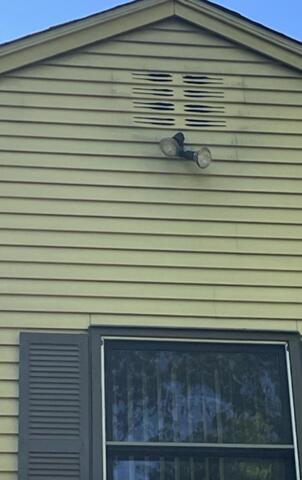
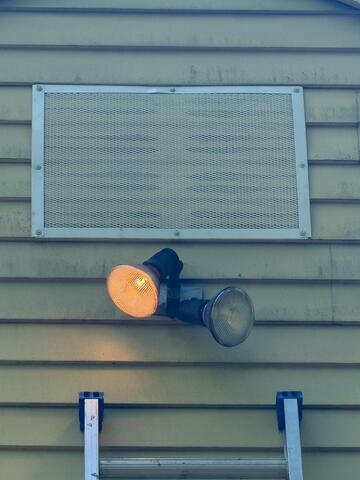
Previously, this customer in Raritan, NJ had several flying squirrels residing in his attic. So he contacted Little Rascals for help and we were sent out. A short while after setting up our retrieval devices, we safely and successfully retrieved all of the flying squirrels in the property and took them to a safer location. Now we're going to prevent them from getting back into the home!
Since the flying squirrels were entering the home via the gable vent, we fashioned a louvered vent guard and installed it over that area. A louvered vent guard is made out of heavy-duty Galvannealed steel (which means it won't rust) and is customized to accommodate vents of all shapes and sizes! Now the gable vent is properly protected from all types of flying squirrels and nuisance wildlife!
Squirrels Ruin Weathered Gable Vent in Rocky Hill, NJ
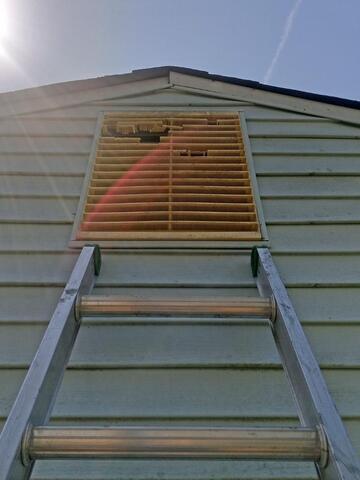

Squirrels had tore a hole right into the gable vent of this home in Rocky Hill, NJ and were taken up residency in the customers attic. Actually, squirrels, and other nuisance wildlife, infesting a home via the gable vents is very common. Over time, the gable vents get weathered and raccoons, squirrels, birds, and bats have no problem ripping away these vents to find shelter inside a home.
Once we set up our retrieval devices, some time later, we retrieved all of the squirrels and took them to a new, humane location. We then disinfected the harborage area, went back to our trucks, and fashioned a louvered gable vent. This material is made out of heavy-duty Galvannealed steel (which means it won't rust) and is customized to accommodate vents of all shapes and sizes! Once we finished, we installed it over the gable vent. Now the area is properly protected from squirrels as well as all nuisance wildlife!
Squirrels Running Around the Attic in Princeton Junction, NJ


This homeowner in Princeton Junction, NJ had suspected that she had squirrels in her attic, so she called Little Rascals to come out and inspect. When we arrived and inspected the roof, we found a chewed-out area by the soffit as well as squirrel hair stuck in it. If that wasn't enough, when we inspected the attic, we actually found the squirrel running around!
Since the chewed-out area was how the squirrel got in, we temporarily closed off the area with hardware cloth, installed a one-way device directly over the access point, and set up several baited devices nearby. The one-way allows the squirrel to safely leave the attic but prevents it from getting back in.
A short while later, we safely retrieved the squirrel! We then relocated it to a new, humane environment, disinfected the attic, and sealed up the soffit area with sturdy metal flashing.
Removing and Excluding Raccoons from Home in Plainsboro, NJ


We were sent out to a home in Plainsboro, NJ to safely remove a raccoon that was in the attic. As soon as we arrived, we noticed a portion of the soffit area was ripped apart. As we got closer, we saw raccoon paw prints near the area. This was how the raccoon was able to enter the home!
We installed a one-way device over the access point and installed several baited devices nearby. A one-way device will allow the raccoon to safely exit the home, but prevent it from getting back in. A short while later, we successfully retrieved the raccoon! We then disinfected the attic area and installed sturdy metal flashing over the main access point to prevent any future nuisance wildlife from using the same access point to infest the home. Lastly, we relocated the raccoon to a new, humane environment.