Wildlife Removal Before & After Photos
Click on a photo to enlarge.
Mice find easy entry into Howell home


I was sent to a home in Howell that was having a problem with overwintering mice. As temperatures drop, mice will start entering our homes seeking food and shelter. Upon arrival, the first thing we do is speak with the homeowner to find out where there has been rodent activity. Since mice are nocturnal and tend to do their foraging in the dead of night, usually homeowners will see signs of activity before spotting live mouse activity. Common signs of mouse trouble are finding mouse droppings, nesting materials, or stored food. A homeowner may also find mouse tracks in dusty places and oily rub marks along the walls. Sometimes, it’s the smell that let’s a homeowner know that there is a problem. We are often called in after a homeowner smells urine or a dead rotting mouse carcass behind the dryer or refrigerator
We want to know where there has been signs of mouse activity to help us focus on our inspection. Mice can find access points into a home in numerous places, but once inside, the small sneaky critters will usually make their way to the kitchen because they are looking for food and that’s where the “motherload” of food is located. Mice are especially attracted to pet foods that are left out in the open and easy-to-infiltrate cardboard cereal containers.
An important part of my inspection when dealing with mice is looking for points of entry. It’s a challenge. Mice are even smaller than you think they are because of their fur. So, unlike some of the larger wildlife like squirrels and raccoons, the entry points are not as obvious, and a hole about the diameter of a dime is enough for them to squeeze in. Common points of entry include holes around pipe chases, electrical conduits, gaps under siding, overhead garage doors, and Bilco basement doors. Overhead doors often don’t shut all the way to the ground, and if weatherstripping is missing or damaged, it’s an open invitation. Likewise, Bilco doors often have uneven gaps between the steel door and the frame that are large enough for small rodent access.
After determining the points of entry, I’ll seal any small holes with copper mesh and caulking. Larger openings require some construction work, and Cowleys has a home construction crew able to repair those gaps and cracks that need more than a sturdy “plug.”
After closing the points of entry, I’ll take care of the infestation by baiting the areas of activity.
Gable Vent Broken Thanks to Squirrels in West Creek, NJ
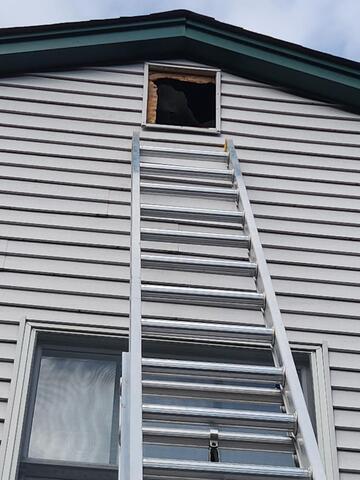
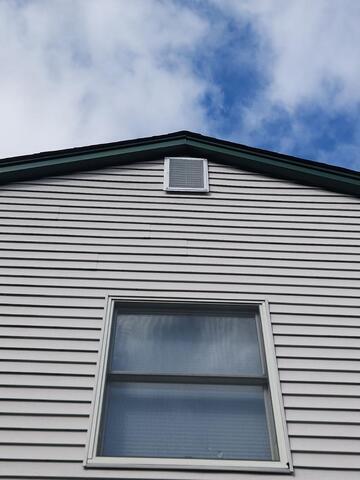
This customer in West Creek, NJ had a big problem. A squirrel had completely destroyed their gable vent and infested the attic. Once we had safely removed the squirrel and took it to a humane location, we disinfected the attic. We then installed a new gable vent and also installed a louvered vent guard over the new gable vent to strengthen it. This material is made out of heavy-duty Galvannealed steel (which means it won't rust) and is customized to accommodate vents of all shapes and sizes! Now the area is protected from squirrels, raccoons, bats, & birds!
Cracked Chimney Gets Sealed in Hazlet, NJ


After we finished installing chimney caps on this homeowner's property, we couldn't help but notice that the chimney was in bad shape. The cracked bricks on the chimney can let moisture in, which will lead to mold problems and even a pest infestation.
After bringing this to the owner's attention, we used a crown seal on the chimney to prevent these issues. Crown seal is a proprietary elastomeric coating that is specifically formulated to repair and protect chimney crowns from water intrusion. Now the chimney is protected from any type of moisture or pest issue.
Damage Repair From Woodpeckers in Holmdel, NJ Home


I was recently dispatched to a home in Holmdel, NJ to treat the damage caused by woodpeckers following a carpenter bee infestation. Carpenter bees are large bees that will bore holes into wood in order to lay their eggs. This boring not only causes damage to the wood through unsightly holes, but also allows water to seep into the wood, causing wood rot.
This homeowner had old wooden fascia boards near his roofline. Carpenter bees had laid eggs in the fascia. Woodpeckers then came along and tore up the facia in order to reach the larvae. Woodpeckers love carpenter bee larvae! It’s fairly common to see woodpecker damage following a carpenter bee infestation — and woodpeckers can do a lot more destruction to homes and other wooden structures in a much shorter time frame than insects can do.
To deter the woodpeckers from causing any more damage, we installed aluminum fascia over the wood. These birds have no interest in trying to peck their way through aluminum.
Flying squirrels make mess in Holmdel, NJ attic.


This homeowner in Holmdel, NJ had a problem with flying squirrels in his attic. Flying squirrels, just like Eastern Grey Squirrels, are rodents. However, we don’t often see them because they are nocturnal. Homeowners generally realize that they have a flying squirrel infestation when they hear animal noises in the attic during the night once these little critters become active. If you happen to see one of these strange-looking squirrels, they are no longer than 10 inches, including their flat tail, and have large black-as-coal eyes. These animals don’t actually fly like birds or bats (the only winged mammal that can actually fly). But these squirrels can glide like a hawk — leaping into space and flattening their fur carpet bodies to glide from one tree to the next (or sometimes your roof where they find a way to access your attic).
The homeowner had the entry points sealed, and contacted Cowleys to take care of the rest. These squirrels make their presence known as most home-invading nuisance wildlife — by leaving a path of destruction — often gnaw marks and always stains and odors from their urine and feces. Flying squirrel feces looks like bat guano and can cause some confusion about the type of wildlife infestation. These particular pests tend to do their business in the same spots. Over time, their waste can seep through and stain the ceiling underneath. Like all wildlife, they can bring parasites and tics into your home, and their droppings, once they dry out, release disease-transmitting airborne particles. Needless to say, wildlife taking up residence inside your home is a serious health hazard.
Cowleys was called in to clean, sanitize, and deodorize the attic. Wearing proper protective equipment and masks, we removed the debris and the soiled insulation and hepa-vacuumed the entire attic space, which was a bona fide biohazard when we had first arrived. After making the attic safe, we installed 10” of our blown-in TAP cellulose insulation. Cowleys is a licensed installer of TAP Pest Control Insulation. TAP stands for its three key properties — Thermal, Acoustical, and Pest Control. This insulation not only offers superior thermal and acoustical (sound-deadening) properties but has a pest control component as well. The paper fibers are treated with a borate solution that is harmless to people, but lethal to many insects including ants, beetles, and termites.
By the time we were finished, this Holmdel residence looked like it had a brand new attic with top-quality insulation. This was a particularly rewarding job for all of us on the installation team. It’s a great feeling to transform an attic that was destroyed by invading wildlife into a clean, beautiful, functional space.