Wildlife Removal Before & After Photos
Click on a photo to enlarge.
Cowleys Nuisance Wildlife Exclusion Process in Manalapan, NJ


A couple in Manalapan, NJ had a major issue with foxes living underneath their deck. We were sent out, inspected the entire area, and set-up our devices to safely retrieve the fox family. Shortly after setting up trapping, the foxes were safely retrieved and we relocated them to a new, humane location.
Although the foxes were safely removed, that was only half the battle. The deck area was still vulnerable for future intrusions from foxes and other nuisance wildlife.
To fix this, we dug a trench around the entire perimeter of the deck area that was 1 ft deep and 1 ft out from the bottom of the deck and then installed hardware cloth. This creates a sturdy "L shaped" perimeter that the foxes (and other nuisance wildlife) are unable to dig through.
Once we finished installing the hardware cloth, we installed lattice around the entire perimeter of the deck. Now the deck is not only protected from future intrusions from any nuisance wildlife, but it looks aesthetically pleasing as well.
Safely Evicting a Raccoon from the Attic in Jackson, NJ


A homeowner in Jackson, NJ had an unsuspecting visitor take up residency in her home — a raccoon! She called our office for help and we were sent out to find out how the raccoon got into the attic and safely remove it.
Moments into our inspection, we noticed that a portion of the soffit was ripped open and there was raccoon hair stuck in the opening. This was the main access point. We temporarily enclosed the area with hardware cloth and installed a one-way device over the access point. The one-way device allows the raccoon to safely leave the attic but prevents it from getting back in. We also placed several baited devices nearby.
A short while later, we safely retrieved the raccoon, relocated it to a new, humane environment, and disinfected the attic area. Lastly, we sealed up the access point with sturdy metal flashing to prevent reinfestation.
Groundhog exclusion in Jackson, NJ


A homeowner in Jackson, NJ contacted Cowleys because of a problem with burrowing groundhogs (woodchucks) digging away at his home’s foundation around the inside corners of the house. For homeowners, these ground squirrels are one of the most damaging pests that can invade your yard. They not only wreak havoc on your lawn from their burrowing activity, as this homeowner found out the hard way, they can damage your home’s foundation if their burrowing activity is adjacent to your home.
As you can see in the photo, the foundation has a brick overhang. Often, we are able to deal with groundhog infestations with “Dig Defence,” an underground fencing system made of heavy galvanized steel. We frequently recommend this product since it does not degrade underground. Also, because Dig Defence is a trenchless system, it is relatively easy to install for experienced installers. However, in the wildlife control business, we must deal with the situation we are given, and find those solutions that will work for those situations. When it comes to wildlife, it’s never one size fits all. Here, because of the overhang, we could not install this type of fencing. So, we had to do this the old-fashioned way.
For this groundhog problem, I first wanted to do a trapping set-up. I was able to trap and relocate two groundhogs. While removing these two problem animals will help, I suspected that there were others, and trying to catch all of them would have been an exercise in futility. First, with all of the increased activities, these rodents are skittish and will shift their movement to avoid the traps. Also, this neighborhood was highly conducive to groundhog activity and I could see them thriving here. The entire neighborhood had strep banks with heavy cover, which is ideal for their burrowing activity. Also, there was plenty of food. Many of the neighboring homes had bird feeders and flowers providing them with virtually unlimited food sources.
After completing the trapping, it was time to do the heavy lifting. We pulled back off the rocks around the foundation where the animals were burrowing. Next, we had to dig out the dirt. With a trench dug out, we put in hardware cloth and secured it with masonry screws. This groundhog exclusion will not only work well, it matched up with the house and was aesthetically appealing. No doubt, there was one of our tougher groundhog exclusion jobs, but the end result was well worth it.
Rodents invade Jackson, NJ home


A homeowner in Jackson, NJ, contacted Cowleys after finding mouse droppings in their basement. Although most everyone uses their basement for storage, this particular home had a significant amount of “stuff.” It was filled with storage totes, furniture, and most everything else that families accumulate and rarely use that is then brought downstairs into what I like to call “the land of no return.” Cluttered basements have a major downside: they offer mice almost unlimited harborage areas. Mice thrive in locations where there is limited access due to clutter, especially when items are directly against the outside walls and no elevated off the ground. Ideally, homeowners should keep items 6” to a foot off the ground and 1-2 feet away from walls. These gaps allow for inspection access around the home’s interior perimeter. Mice have poor eyesight and rely on tactile sensation and the smells left by other mice. As such, they like to form travel lanes along the edges of walls. Along these travel lanes, you often find mouse droppings in corners where the mice rest.
I explained the relationship between basement storage issues and mice problems to the homeowners. I was happy to hear that they were going to listen to my advice by rearranging their storage items and clearing out what they were no longer using. The homeowners told me that this infestation and my advice had motivated them to do what they had been thinking about for awhile —having a garage sale and donating items to charity. Charitable donations of household items are not just a good deed and a tax write-off — it’s also a great way to keep your home clutter-free and remove harborage areas for rodents and other pests to hide and nest.
In the meantime, I set up rodent bait stations around the basement perimeter and sealed up access holes around some incoming utility lines. This particular job is a great example of showing how pest control is a team effort with the pest control service and the homeowner. Working together is the key to preventing infestations and getting them resolved quickly when they occur.
Fixing Up what the Raccoons Damaged in Avenel, NJ
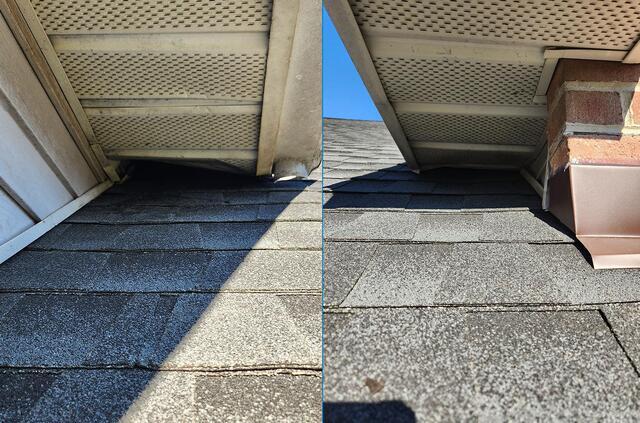
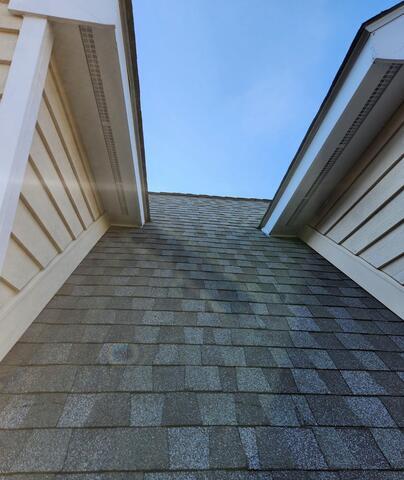
This customer in Avenel, NJ had raccoons residing in his home, primarily in the attic. Our Nuisance wildlife team was dispatched to safely retrieved these nuisance raccoons. After examining the exterior of the home, we determined that the raccoons got into the attic via two areas of the soffit.
We installed a one-way device over each one of the access points and then temporarily enclosed the areas with hardware cloth. We then set-up several baited traps near the access points. The one-way will allow the raccoons to leave the area safely but prevent them from getting back in.
Shortly after setting up our devices, we safely retrieved the raccoons and took them to a new, safer location. We then disinfected the attic and installed sturdy metal flashing over each one of the access points.