Wildlife Removal Before & After Photos
Click on a photo to enlarge.
Squirrels Use Old Concrete Steps to Infest Basement in Brick, NJ


As this customer in Brick, NJ was cleaning his basement, he was terrified to find several squirrels running around the area! He searched for a reputable wildlife removal company, found Little Rascals, called us, and we were sent out. As we thoroughly inspected the basement, we noticed a small entry point behind the drop ceiling. We then inspected the exterior of the home and found some old concrete steps that were no longer in use underneath the newly installed deck. Turns out that the squirrels were actually squeezing through the small openings in the concrete steps to infest the basement!
To safely retrieve the squirrels, we installed a positive set over each of the openings and temporarily enclosed them in hardware cloth. We also set up several baited devices nearby. A positive set is comprised of a nose cone that is attached to a two-gaited, heavy-duty device. The nose cone will safely guide the squirrels into the device. It's called a positive set, because we are positive that the squirrels will enter our device. A short while later, we safely retrieved the squirrels and relocated them to a new, humane location.
To prevent any future intrusions from squirrels, as well as other nuisance wildlife, we stuffed each opening in the steps with Xcluder® Fill Fabric and then used concrete to seal up the cracks.
Need to Keep the Raccoons Out in Shrewsbury, NJ


This homeowner in Shrewsbury, NJ had a raccoon rip apart his weathered gable vent and make a new home in his attic! Previously, we safely retrieved the raccoon and relocated it to a new, humane environment. Afterward, we disinfected the entire attic and removed all the contaminated insulation. In regards to replacing his insulation, the homeowner wanted our Contracting team to come out and reinsulate the attic with new blown-in cellulose insulation.
In order to prevent any future raccoons from reinfesting the home, we removed the old, broken gable vent and replaced it with a louvered vent guard. This material is made of heavy-duty Galvannealed steel (which means it won't rust) and is customized to accommodate vents of all shapes and sizes. Now the home is properly protected from raccoons, as well as all nuisance wildlife!
Protecting the Fascia Board from Squirrels in Atlantic Highlands, NJ


Squirrels were harboring in the attic of this home in Atlantic Highlands, NJ and we were sent out to safely remove them from the property. After inspecting the exterior of the home, we discovered that the squirrels were able to get inside by chewing through the exposed fascia.
In order to safely remove them, we installed a one-way device over the main access point and temporarily enclosed the area off with hardware cloth. We also set up a number of retrieval device close by. The one-way device will allow the squirrels to safely leave the attic, but prevent them from getting back in. In fact, a short while after setting up, we retrieved all of the squirrels and took them to a safer, humane location.
We then removed all of the hardware cloth, disinfected the attic, and installed sturdy metal flashing over the entire fascia board. This will prevent the squirrels, and any other nuisance wildlife, from getting back into the attic through this area.
An Effective Way to Keep Flying Squirrels Out of the Attic in Atlantic Highlands, NJ
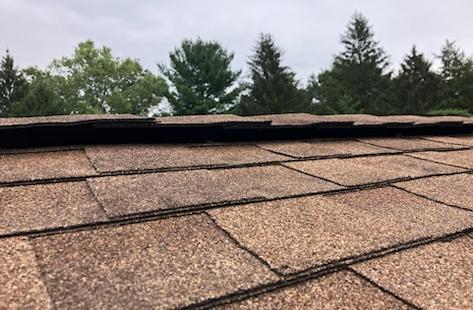
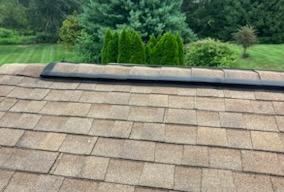
This homeowner had an issue with flying squirrels in her attic. After inspecting the home, we determined that they were getting into the home via the ridge vent. After we successfully and safely removed all the flying squirrels from the home, we began the exclusion process.
In order to properly secure the ride vents, we installed Ridge-Guard®. Ridge-Guard® will secure and reinforce the ridge vent shingles, in order to prevent any future intrusions from flying squirrels, bats, or any other nuisance wildlife.
Old vent boots gets replaced from this Atlantic Highlands home


The Cowleys nuisance wildlife crew was sent to this home in Atlantic Highlands, NJ to handle the exclusion work following a wildlife infestation in the attic. The wildlife access points were around the PVC roof vents caused by deterioration of the surrounding vent boots. We arrived to do the repair work to fix the problem.
Vent boots encase the PVC vent pipes that stick out of your roof. When doing repairs around vent pipe flashing after wildlife entry, homeowners sometimes ask us why their home even has these mysterious vent pipes since they seem like nothing but trouble.
These pipes are part of your plumbing system, or what plumbers call you drain-waste-vent (DWV) system, At the risk of oversimplification, this system has three major parts. The “D” stands for drainpipes, the pipes that collect water from sinks, showers, tubs, and your appliances like your dishwasher and washing machine. The “W” stands for waste pipes, the pipes that remove water and waste from your toilets. All of these pipes connect to the municipality’s sewer line or your septic system. The “V” stands for the vent pipes that stick out of your roof. Building codes require at least one of them.
Vent pipes have two important functions for your plumbing system. First, they equalize pressure in the pipes by allowing air to enter so that the liquid flows freely. (Just think what happens if you put your thumb over a straw immediately after you suck in liquid or if you try to pour liquid out of a can without a second air hole. Without air in the system, water doesn’t flow well.) Second, these vent pipes remove or exhaust sewer gases that are produced and collected from the decomposition of wastes in the sewage system. Sewer gas contains a number of nasty gases including hydrogen sulfide and ammonia that are flammable, poisonous, and just plain stink. These vents are put high up on your roof so that the sewer gas is not pulled back into the home through the windows or attic.
So, if all that’s too much information, the short answer is that you need those vent pipes sticking out of your roof for your plumbing system to work. Unfortunately, even though these vent pipes are essential, they are also rank up there as one of the most common causes of roof leaks. In addition, the PVC vent areas are vulnerable to wildlife like raccoons that can tear through the vent flashing to gain access to the attic.
To help prevent leaks and give some added protection against wildlife entry, vent boots seal the area where the pipes come out. Unfortunately, vent boots often don’t last the life of the roof. Because they’re usually made out of rubber, over time, the sun and the outdoor elements will cause them to rot. With this home, the vent boots had deteriorated to the point where they were gone completely, leaving entry points for water intrusions and for pests and wildlife to gain access inside the home.