Wildlife Removal - Damaged vent Lets raccoons in a home in Keyport
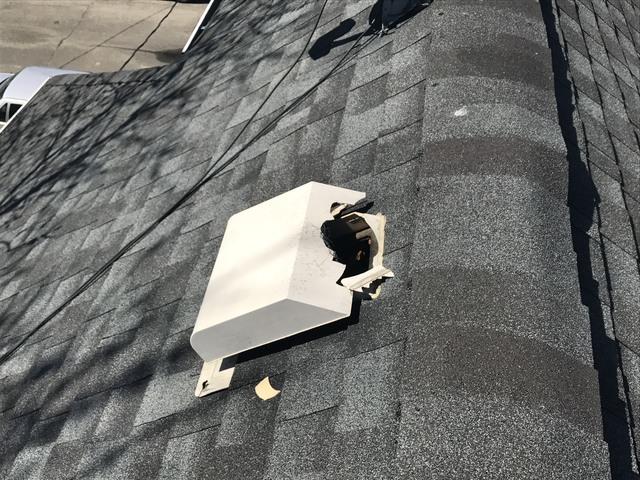
Upon arrival, after speaking with the homeowner, I started my inspection. The first order of business is to find the access point into the home and figure out how the critters were getting into the attic wall void. usually, animals get in through holes in the siding or around the roofline, especially through the soffit boards that are prone to water damage. After a thorough inspection, I could not find any breaches to the siding or soffits. This made me even more determined. The animals had to have found or made an opening somewhere, and I was going to find it.
I asked the homeowner is any vents or fans were installed on the roof. She stated the home had a static (louver) vent on the roof. These low-rising vents move hot air and moisture out of the attic to help ventilate the home along with the soffit vents. Static vents are stationary with no moving parts, and are are popular with roofing contractors because they're not that expensive. They are installed over a hole cut out of the roof, and are most effective when installed close to the roof's ridge.
Because static vents are as flat as pancakes, they can be hard to inspect without actually being on the roof. So, it was time to explore! I climbed up on the roof to get a closer look, and sure enough, there was a big hole in the side of the vent. This vent was in bad shape. It was clearly as old as the roof itself and made of plastic. Many years of weathering had taken its toll. The vent was now very brittle, making an easy entrance making for a small raccoon.