Spring is Coming & So Are the Spiders
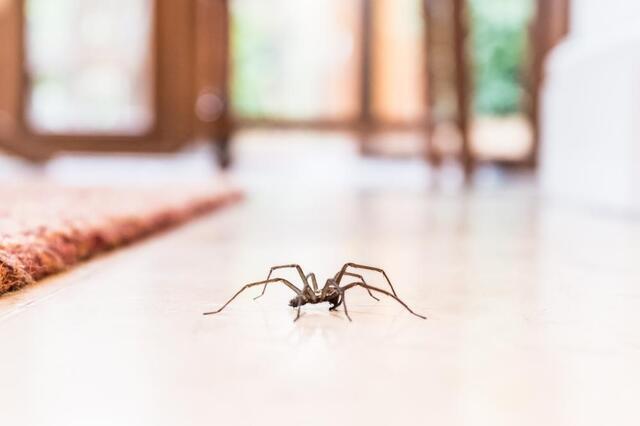
Thank goodness, spring is right around the corner! After a cold and snowy winter, spring is definitely a much-wanted season. One of the first signs of spring is insects, coming out of their winter hiding spots, and becoming much more visible. You may notice these pests, and so will something else, spiders. As insect activity increases, so will the presence of spiders. House spiders become more noticeable as they come out from hiding spaces to hunt their emerging prey. While house spiders are harmless to humans, their increased visibility can cause concern.
The common house spider is, as its name suggests, the spider most often encountered indoors. It is considered a nuisance pest because although it may be scary to a homeowner, it isn’t dangerous. Unlike some other pests that spread disease, or other types of spiders that have venomous bites, the web of the house spider probably causes more issues than the spider itself.
House spiders are usually yellowish brown with dirty white abdomens, but their color is highly variable. Like most spiders, house spiders have eight eyes. In house spiders, two lateral pairs of eyes almost touch. Females are larger than males with females up to 5/16” whereas males are rarely bigger than 3/16”. Females also have a spherical abdomen while their male counterparts have elongated abdomens.
A single house spider, with their small size and propensity to hide, might not be that noticeable, but with their ability to reproduce quickly in a short amount of time, there may be enough spiders in your home that seeing them will become common place.
Female house spiders lay approximately 250 eggs in a silken sac. These sacs are round and brown and are deposited on the spider’s web. A spider may lay more than one sac on the web at a time. In her lifetime, a single female house spider may produce up to 17 sacs, containing a total of more than 3,760 eggs. A house spiders’ lifespan is approximately one year, which means in approximately one year, if conditions are right, you could have over 3,000 descendants of one female spider in your house.
So how do you prevent house spiders from taking over your home? First, prevention is always best. Seal cracks around the outside of your house with a silicone-based caulk to prevent them from entering in the first place. Check the screens in your windows for rips. Although it may be tempting to open all your windows and doors to let spring air in, do not do this unless you have intact screens to keep pests out.
If spiders have found their way into your home your vacuum will become a very important tool. Vacuum frequently! Use your vacuum to get rid of spiders, their egg sacs, and their webs. Vacuuming is a much more efficient way to remove spiders from your home than using a broom. Adult spiders are often able to escape a broom, and egg sacs can attach themselves to the bristles of the broom and survive.
While over-the-counter spider killer sprays are available at big-box stores, they are often ineffective because they only work on direct contact and lack long-lasting residual effects. If you are concerned about spiders in your home the best course of action is to contact Cowleys! We can quickly and safely take care of your spider problem.