Don't Let Your Cat Catch Rodents
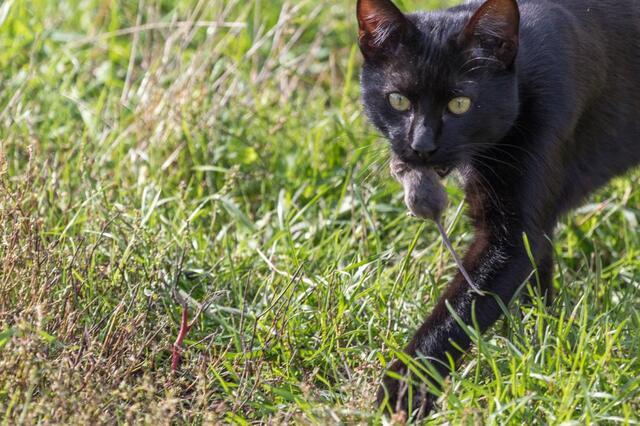
This is the season of black cats. We see them in decorations, kids sing spooky songs about them in school, and black cats play a major role in Halloween folk lore. During this black cat season we should take time to reflect on all the great things they can do for us, but also talk about the things they should not do. While cats play an important role in scary stories and bring joy to many people’s homes as pets, there are some roles cats simply should not take on. One such role is that of a family’s pest control professional. It may seem like a great option, but having your cat catch mice for you can be harmful for both you and your cat.
Discouraging cats from catching mice may be a controversial stance. Historically, cats have earned their keep by ridding houses and barns of mice and rats. During the US expansion west, cats were highly valued for controlling rodent populations in mines, towns, and on farms, where they protected vital supplies. To this day, farmers use barn cats to keep rodent populations down. Some people will argue that cats need the stimulation of hunting to keep them happy. While these are all very compelling arguments, there is a very specific reason to discourage your cat from hunting mice, that is disease.
Cats can contract bacterial, viral, and parasitic infections from contact with mice. The infections range from salmonellosis to tapeworms. In fact, mice are known to carry over 35 different diseases. One mouse borne disease that has been in the news relatively recently is hantavirus. This is the disease that killed Betsy Arakawa, the well known concert pianist who was married to actor Gene Hackman. While some individual mice may not have any of these diseases, there is no way for the average homeowner to know which mice are sick and which are not. While the likelihood of contracting a serious disease from your cat after they have caught a diseased mouse is relatively low, certain people should be more cautious. People with immature or weakened immune systems are more susceptible to these diseases. This group includes infants, elderly people, and people undergoing cancer chemotherapy, or receiving other drugs that may suppress their immune systems.
Another concern for cats that hunt rodents is the chance of being poisoned. If a cat eats a rodent that has ingested rodenticide they can get sick. There are a variety of different symptoms and the outcome depends on the type and amount of poison, but some symptoms can include internal bleeding, organ failure, neurological problems, and even death. Symptoms might not show up for several days, and if left untreated, they can be worse, so if you suspect your cat has had contact with a poisoned mouse you should contact a veterinarian immediately, and provide them with any details you have about the suspected poison.
So if your cat is off limits as your go-to for getting rid of mice what do you do? Call Cowleys! We will work with you to ensure that you, your family and your cat can all be safe and that mice stay out of your home.
Related Content: