


Pest Control Contractor & Exterminators in Woodbridge, NJ
Click the icons to see what our customers had to say.


Woodbridge, NJ Expert Pest Control Company
Here at Cowleys Pest Services we not only adhere to the highest pest control standards, our goal is to provide you with an excellent experience and service in Woodbridge and nearby NJ.
From your first phone call through treatment and follow-up we at Cowleys Pest Services pledge to give you great customer service while fixing your pest problem.
Since 1991, we have been treating a wide variety of pests, bedbugs, insects and rodents -- just contact us to get more details on your home or building's issue. Take advantage of our expertise to get rid of unwanted pests or animals in your Woodbridge, NJ home.
At Cowleys Pest Services we also have pest control plans where we routinely inspect your home or building and apply needed solutions ahead of developing a recurring pest problem. Our pest service plans have different levels too, to best suit your needs that you can change over time if needed. From our Green Service Plan to our Platinum Service Plan, we'll keep your home pest-free.
Business & Home Pest Services We Offer in Woodbridge:
- Bedbug Extermination
- Flea Control
- Termite Control
- Pest Control
- Exterminators
- Rodent Control
- Ant, Beetle, Spider, Insect Control
- Tick Control Services
- Pest, Bird and Animal Control Services
- Attic Insulation Services
- Gutter Guards
- Crawl Space Encapsulation
- Expertise and Technical Know-How to Fix Your Pest Problem
- Financing Available
- Written Estimates and Inspections


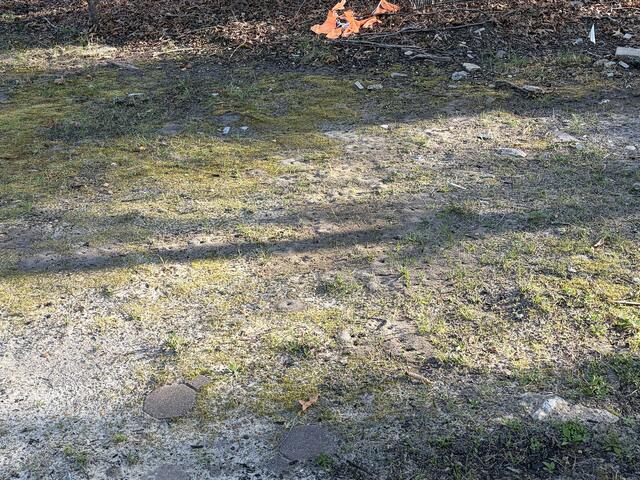
Throughout this customer's backyard were hundreds and hundreds of ant hills. The covered almost every single square inch of the yard? The first thing we did was apply a granular bait throughout the entire backyard. Once we had finished with that, as a precautionary measure, we treated the exterior perimeter of the home with a non-repellent application.
As they forage for food, the worker ants are going to come in contact with these treatments, return to their colony, and transfer them to their queen and the other ants. They'll accomplish that by feeding one another, grooming one another, and eating their own dead. A short while later, the ant colonies will be neutralized.
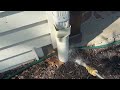
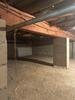
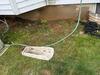
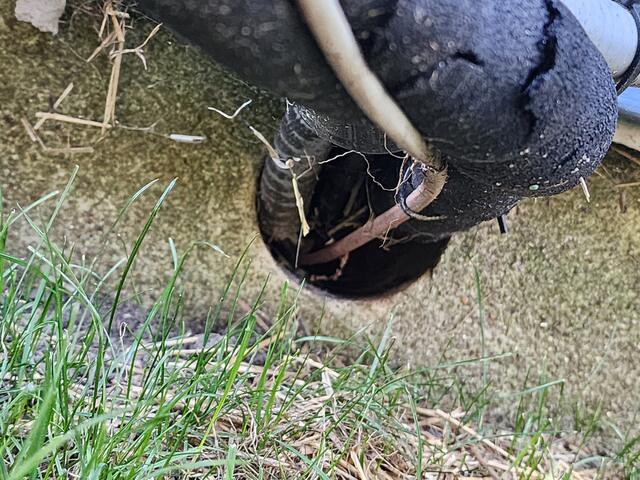
We noticed a large amount of mice droppings throughout the crawl space of this home in Woodbridge, NJ during a routine fall service. In order to determine how the mice were getting into the home, we thoroughly inspected the exterior of the property. Moments into our inspection, we found it! A large gap around one of the utility lines.
We installed several rodent bait stations throughout the crawl space and around the exterior of the home. Once we were finished, we scheduled several follow up inspections to monitor the mice activity and replenish the bait stations as needed.
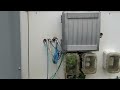
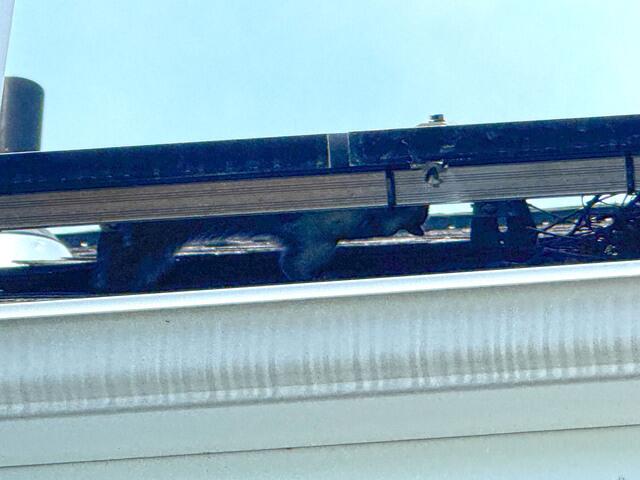
A new customer in Woodbridge, NJ contacted Little Rascals after noticing several squirrels roaming across her roof. So we were sent out to retrieve them safely. During our inspection we discovered that the squirrels were actually harborage underneath the solar panels. Not only that, but they were damaging the solar panels too!
In order to prevent the squirrels, as well as all nuisance wildlife and birds, from nesting underneath the solar panels we installed our solar panel exclusion kit around the entire perimeter of the solar panels. This kit creates a physical barrier to keep the squirrels from accessing and nesting in the area beneath the solar arrays, protecting the roof and equipment from damage.
We were sent out to an adult community in Woodbridge, NJ to handle what was reported to us as a "large bee infestation in the front yard." Once we arrived and inspected the area, we found a large digger bee infestation! Digger bees are a 1/4 to a 1/2 long and typically nest in areas of the landscape where the grass is sparse or very thin. One way to determine that you have a digger bee infestation is to look for the little mounds of soil with a pencil-sized hole in it, typically on top.
Although their sheer numbers can be overwhelming, digger bees aren't aggressive. If you don't step on them or grab them, they won't attack you. However, the venom from a digger bee sting is strong enough to cause a severe allergic reaction in some people. For treatment, we injected a residual dusting application into each one of the digger bee mounds. Afterward, we applied a granular bait throughout the infested areas. These treatments will quickly exterminate the digger bees.


Recently, I was sent to treat an apartment unit in Woodbridge, NJ for a roach infestation. Cockroaches often seek out warm spots in a kitchen, for example, you’ll often find them hiding in and around appliance motor boxes. Roaches are stubborn, resilient insects and treating a heavy infestation can be a challenge, especially in high density housing where the roaches can migrate from one unit to the next. It is important for tenants to keep their kitchens clean and free of food debris.
Here, I wanted to inspect and treat two common roach nesting areas behind the oven and refrigerator and pulled the appliances out away from the wall. I also treated the interior warm spots in the appliances, including the motor box in the microwave, as well as inside the kitchen cabinets. I placed insect monitors throughout the kitchen so I could assess the infestation level on my follow-up visit as used baits and a growth regular application. Roach infestations, like bed bug infestations, don’t go away overnight and often takes multiple follow-up visits to fully resolve the infestation. Also, it is important that the tenant cooperates by keeping the kitchen area clean and sanitary and by removing unnecessary clutter to keep down potential insect harborage areas.

As part of our periodic home protection plan (HPP) visits, we conduct a thorough exterior perimeter inspection of the home’s foundation for any pest problems. Often, the homeowner is unaware of outdoor insect activity. By treating these problems while they are still outside, we can resolve many pest problem before insects start gaining access to the home. The only thing worse than an outdoor infestation is an infestation that spreads inside the home!
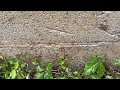
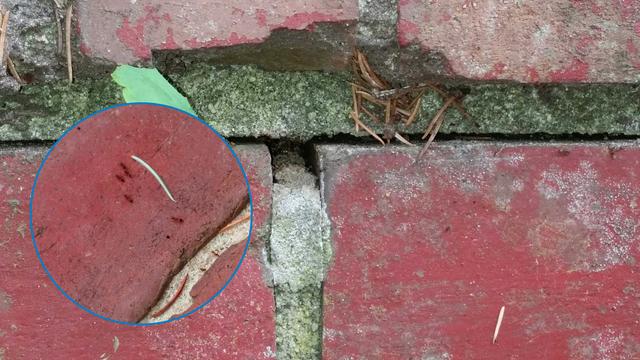
Here, I was sent to a home in Woodbridge, NJ covered under our HPP program where I located a busy ant trail right by the front door. I was surprised that foraging ants had not yet found their way inside or, so far, they had escaped detention. Whenever I locate an ant trail, I follow it to locate their nest. Here, I followed the trail across the front deck where it disappeared into the voids of the brick foundation.
To resolve this infestation, I used a variety of products, each of which has its own specific purpose. First, I treated the exterior foundation with a liquid barrier that prevents the ants from entering the home. I wanted to be sure that this outdoor infestation stayed outside. Next, I treated the brick voids with a powerful non-residual dust that quickly knocks down the ant population. Finally, I applied a granular bait around the exterior areas. This bait combines a mixture of foods with a hidden delayed-action product that is carried back to the nest and shared with the other members of the colony. This product substantially reduces the ant population in and around the nest and also immediately halts egg production. And no more eggs means no more colony. With this combination of products, this ant infestation will stay outside of the home for the rest of its limited life.
I always feel good about taking care of pest infestations that the homeowner was unaware of, and would have gotten worse if left untreated. This job shows one of the key benefits of a residential HPP program — it allows us to stay on top of pest infestations and treat them while they are still in their early stages and not causing too much trouble for the homeowner.
Recently, I completed a termite treatment in Woodbridge, NJ. The homeowner contacted Cowleys after observing termite swarmers in the laundry room and bathroom. Flying termites (“swarmers”) are dark-bodied, winged termites. Every spring, like clockwork, termites swarm to search for mates and start a new colony. These termites are completely different than wood-destroying worker termites. Worker termites do their dirty work in private. You’ll only see them if you happen to inspect a piece of infested wood or you crack open a mud tube during an active infestation. Swarmers, on the other hand, are visible. In fact, swarmers are, by far, the most visible sign of a termite infestation. When a termite colony swarms, thousands of winged termites are released. Soon thereafter, swarmers shed their wings. Should termites swarm indoors, they do their best to try to escape, so you’ll often find piles of termite wings on windowsills or on countertops near light sources. Most termites that have the bad luck of swarming indoors will die. Nevertheless, it’s still important to contact a termite pest control professional immediately. If your home has an inside swarm, there is an underground active termite colony somewhere nearby.
When dealing with an indoor swarm, it’s often difficult to ascertain exactly where the subterranean colony is located. All you know for sure is that the swarmers were able to gain access into the home through some gap or crack in the home’s foundation. It is common for swarmers to find their way inside wall voids as well. To cover all bases, I drilled and treated all four walls in the laundry room as well as the bathroom. The laundry room adjoined the bathroom with a partition wall separating the two rooms. With this treatment, even though the exact location of the colony is unknown, I treated a broad enough coverage area for the colony to soon be destroyed.

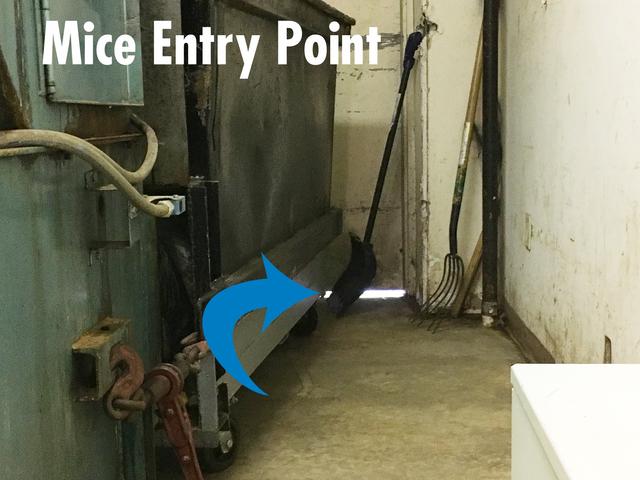
I was recently in Woodbridge, NJ to service one of our multi-unit residential accounts. The property manager had told me that some tenants had observed mouse activity in the garbage room, so I was especially interested in locating potential rodent access points into the building.
During my inspection, I immediately found the source of the problem. The door to the building’s garbage room was missing a door sweep, leaving a large gap for mice to enter. Mice do not require much of an opening to enter a structure. Because of their size, mice are able to squeeze through a hole the size of a dime. The good rule of thumb is that if a mouse can poke its head through an opening, the rest of its body can follow. For a mouse, the gap underneath a door that is missing a door sweep was a wide open invitation to explore inside and forage for food. Garbage rooms are major mouse (and for that matter, insect) attractant because garbage, at least in residential facilities, inevitably contains food waste. And for a mouse, our food waste is their treasure!
I immediately pointed out this issue to the property manager, and recommended that they install a door sweep to block rodent access. This rodent infestation was another example of how a little inexpensive maintenance can go a long way as part of a preventative pest control program. To resolve the active mouse infestation, I placed RTU rodent tamper-resistant bait stations in each corner of the room to monitor rodent activity (I monitor their activity by checking whether any of the bait was eaten as part of my follow-up visits). These bait stations, which require a key to open, fit flush against the wall or in a corner where mice travel. With these bait stations in place and the mouse entry point excluded, it will not take long for this infestation to be resolved.