

Titusville, NJ Approved Pest and Wildlife Control Contractor
Click the icons to see what our customers had to say.


Titusville, NJ Expert Pest Control Company
Here at Cowleys Pest Services we not only adhere to the highest pest control standards, our goal is to provide you with an excellent experience and service in Titusville and nearby NJ.
From your first phone call through treatment and follow-up we at Cowleys Pest Services pledge to give you great customer service while fixing your pest problem.
Since 1991, we have been treating a wide variety of pests, bedbugs, insects and rodents -- just contact us to get more details on your home or building's issue. Take advantage of our expertise to get rid of unwanted pests or animals in your Titusville, NJ home.
At Cowleys Pest Services we also have pest control plans where we routinely inspect your home or building and apply needed solutions ahead of developing a recurring pest problem. Our pest service plans have different levels too, to best suit your needs that you can change over time if needed. From our Green Service Plan to our Platinum Service Plan, we'll keep your home pest-free.
Business & Home Pest Services We Offer in Titusville:
- Bedbug Extermination
- Flea Control
- Termite Control
- Pest Control
- Exterminators
- Rodent Control
- Ant, Beetle, Spider, Insect Control
- Tick Control Services
- Pest, Bird and Animal Control Services
- Attic Insulation Services
- Gutter Guards
- Crawl Space Encapsulation
- Expertise and Technical Know-How to Fix Your Pest Problem
- Financing Available
- Written Estimates and Inspections


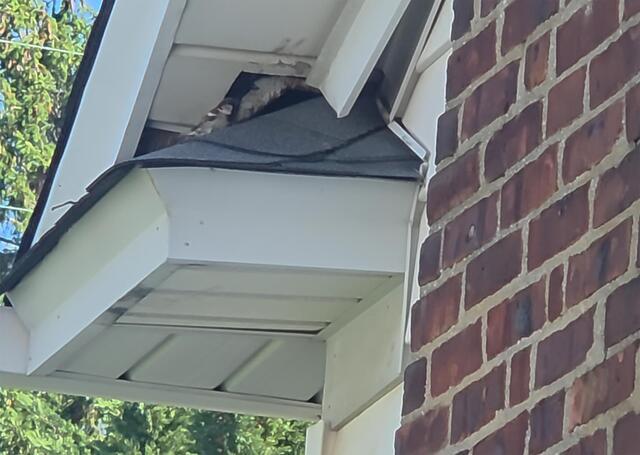
As this customer in Titusville, NJ was getting ready to leave for work, he noticed that a portion of the soffit appeared damaged. He took a closer look and saw a bird fly out of the area! He immediately called Bird Solutions by Cowleys and we were sent out.
First thing we did was inspect the area to make sure no young birds or eggs were present (there wasn't). We then carefully removed all of the nesting debris and then disinfected the area with a solution that targets bird mites. Bird mites are parasites that feed on the blood of birds. When birds leave their nests, the mites are left behind without a suitable host for their next blood meal. They will make their way into a home, and once inside they will take over, climbing all over your walls, ceilings, and beddings. To make matters worse, bird mites are tiny and semi-transparent, so they are extremely difficult to detect. Bird mites are the main reason why extreme care is needed when removing a nest. The last thing you want to do is disrupt the mites that are crawling in and around the nesting material.
Lastly, we installed sturdy metal flashing over the access point to prevent any future infestations from birds, bats, or any other nuisance wildlife.
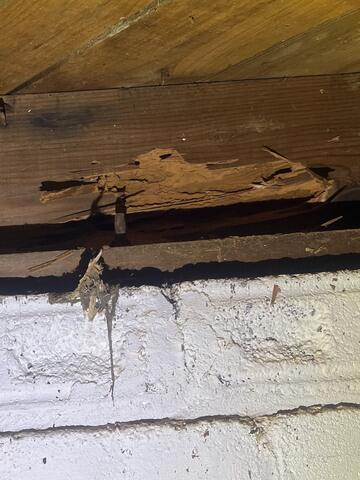
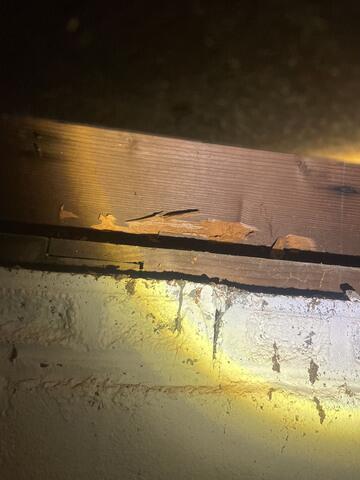
We were sent out to the home of a new customer in Ewing, NJ, who spotted some termite damage in a box plate in his crawl space. When we arrived and took a closer look at the damage, we realized that the homeowner didn't have a termite infestation, but a powder-post beetle infestation.
Powder-post beetles is a term used to describe several species of small (1/8-3/4 inch long) insects that feed on wood and can potentially reduce the wood to a flour-like powder. These pests can even survive in colder climates. Powder-post beetle larvae spend months or years inside wood while developing, feeding mainly on the starch content. Their presence is only apparent when they emerge as adults, leaving behind pinhole-sized openings, often called "shot holes" that range in diameter from 1⁄32 inch to 1⁄8 inch. If wood conditions are right, female beetles may lay their eggs and re-infest the wood, continuing the cycle for generations.
We injected a foaming termiticide application into the box plate and, at the request of the owner, other wooden members in the crawl space. This termiticide creates a protective zone that the powder-post beetles are unable to detect. Once they come in contact with this treatment and bring it back to their nest to share, they are exterminated.
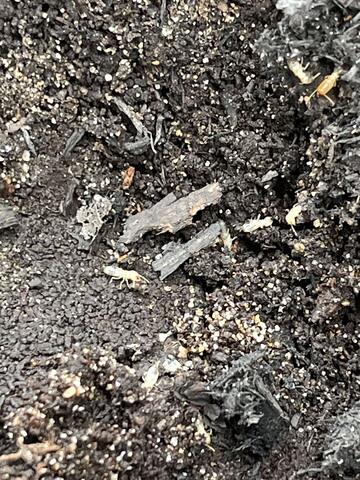
During an inspection of this customer's property in Titusville, NJ, we discovered something hidden in the mulch beds boarding the home - subterranean termites! We informed the owner and they immediately agreed for a termite treatment of their home.
First, we injected a liquid termiticide throughout the mulch bed as well as around the entire exterior of the home. This application binds to the treated areas and creates a protective zone that is undetectable to the termites. The termites will continue to go about their business and come in contact with the termiticide. They will then bring it back to their nest and transfer the treatment throughout their colony.In short amount of time, the termites will be exterminated.
After that, we installed several Sentricon® stations around the entire exterior of the home. When the termites come in contact with the Sentricon® bait system, they eat the cellulose material, unknowingly consuming an insect growth inhibitor. The termites then go on to share this "food" with their colony members. As the termites continuously share the growth inhibitor, it takes over and prevents the termites from being able to molt. If they cannot molt, then the colony is eliminated. Now the home is fully protected from termites for many years.
This homeowner in Titusville, NJ was cleaning his back deck one day when he noticed a bird fly off the deck column. He took a closer look and found a birds nest! Since his neighbor had used Bird Solutions by Cowleys before, he got our number from his neighbor, gave us a call, and we were sent out.
First, we carefully removed the nesting debris and then disinfected the area with an application that eliminates bird mites. What are bird mites exactly? Bird mites are blood-sucking parasites that feed on the blood of birds. Once birds leave their nests, the mites are left behind without a suitable host and then make their way into a home. Once inside, they will then feast on the blood of yourself, your family, and your pets! To make matters worse, bird mites are tiny and semi-transparent, so they are extremely difficult to detect!
Once we finished disinfecting the area, to prevent any future intrusions from all nuisance birds, we installed a Bird Slope on each one of the columns and ledges. Bird Slope is a physical bird deterrent used to block birds from landing or nesting on open ledges. It's unique angled design makes it impossible for birds to land or nest in 90° areas such as ledges, window sills, or eaves making it an effective bird deterrent against all nuisance birds.

One day, this customer in Titusville, NJ, opened up her master bedroom window (which was located on the 2nd floor) to get some fresh air. So quickly regretted it as a nasty swarm of hornets started to fly into the bedroom! She quickly closed the window and, since she is current Home Protection Plan customer, called our office for help!
Once we arrived, we spotted the soccer ball sized hornets nest attached to the soffit that was just above the master bedroom window. After we equipped our protective bee suit, we grabbed our extendable pole, attached a knockdown dusting application to it, and injected it directly into the nest. This treatment will exterminate the hornets almost immediately. A short while later, we removed the nest, disposed of it, and then applied a residual application to the area. This product will eliminate any hornets that return to this area as well as prevent them from building another nest.

During a schedule service for a new Home Protection Plan customer in Titusville, NJ, we found a Western Conifer Seed Bug on the front porch. The Western conifer seed bug has the habit of entering buildings at the onset of cold weather in the late summer or early fall as it seeks a protected site to spend the winter. These bugs do not bite or sting, nor do they cause damage to the home. They will, however, give off a pungent odor if you handle them, which is part of the insect's defensive strategy. They also may make a buzzing sound when flying.
They're commonly called leaf-footed bugs, and like many members of the Coreidae family, it has a flattened, leaf-like expansion on the hind legs. The adult is about 3/4 inch (16-20 mm) in length and is dull brownish. There is a faint white zigzag stripe across the midpoint of its upper surface. In spring these bugs move out of doors to coniferous trees nearby. The bugs feed on the developing seeds and early flowers of different species of conifers.
For treatment, we applied a liquid non residual directly to the pest, as well as around the entire exterior of the home. This product will eliminate the Western conifer seed bug in a short amount of time.

This homeowner in Titusville, NJ, called our Pest Control Division after finding a hornet's nest in one of her shrubs! Once we arrived and took a closer look at these stinging insects, we were able to identify them as bald-faced hornets. As we were heading back to our truck, we found another bald-faced hornets nest in another tree in the backyard! Bald-faced hornets are social stinging insects that are a close relative to yellow jackets. The surface of their upper midsection almost looks triangular from the side, and they have white markings on their face. One very important fact that you must know about bald-faced hornets is that they are EXTREMELY aggressive and will not hesitate to sting anything that invades their space.
For treatment, we injected each nest with a knockdown liquid and a knockdown aerosol application. Both of these treatments rapidly exterminate the bald-faced hornets. A short while later, we removed each of the nests and properly disposed of them.


We were recently sent out on a service call to a home in Titusville, NJ, to handle a severe cockroach infestation. The cockroaches were behind the fridge, under the stove, in the kitchen cabinets, and even on the ceiling! Cockroaches can spread at least 33 kinds of bacteria, 6 kinds of parasitic worms, and 7 other kinds of human pathogens. After the homeowner removed everything in her cabinets and drawers, we moved everything that we could away from the walls and started treating all cracks and crevices with our microinjector that contains an EPA registered insect growth regulator combined with a residual product.
This treatment affects the cockroaches' reproductive system and prevents them from reaching adulthood. Next, we removed all the electrical plates and treated around and inside the outlets with a knockdown dusting application which will rapidly exterminate the cockroaches. Lastly, we scheduled several follow-up visits to apply any additional treatments if needed and to monitor the infestation.

We were sent out on a service call for a homeowner in Titusville, NJ who reported seeing a large number of ants by the sliding glass door in her living room. When we inspected the area, we noticed that a small bottom corner of the door seem to be damaged and there was a gap about the size of a dime in it. This was how the ants were getting in the home. To find the main harborage area for the ants, we followed their trail outside to a small shrub about 20 feet from the home. We informed the owner what we found and told her that the glass door needs to be fixed or replaced ASAP or she will continue to have problems with pest, especially rodents, in her home. We were happy to hear that she will have the door fixed once the ants are gone.
First, we applied a liquid residual application to the ants that were by the sliding glass door, the two adjacent rooms in the home (at the owners request), and along the entire exterior of the home. Afterward, we treated the area where the ants were harboring outside, as well as the entire landscape area, with a granular bait. Once the worker ants come in contact with either of these products they will bring them back to their nest and share the treatments with their reproductive queen and the other ants in the colony. A short while later, the ants are exterminated.

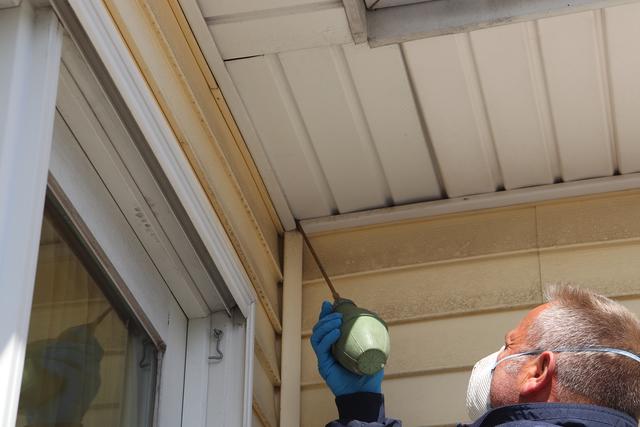
As this Home Protection Plan customer in Titusville, NJ was relaxing on her deck, she noticed a number of yellow jackets flying around her soffit by the back door. Since her daughter is highly allergic to bee stings, she immediately called Cowleys for help. As we inspected the area, we noticed that the yellow jackets were actually nesting underneath a portion of the soffit.
For treatment, we injected a knockdown dusting application to the infestation area. This application rapidly exterminates the yellow jackets. Once they were gone we removed the nest, disposed of it properly, and applied a liquid residual to the area to eliminate any returning yellow jackets as well as prevent them from rebuilding another nest.